
You walk into your laundry room and notice a strange smell. It’s damp, earthy, and a little like wet cardboard. You check the washing machine, look around the floor, and open a window.
The smell seems to fade.
A few days later, it’s back.
Maybe you’ve noticed the same thing in a bathroom, closet, or bedroom. You’ve cleaned the room, but the smell keeps returning. Now you’re wondering if something is wrong.
You might think mold is unlikely when the weather outside is dry. After all, moisture problems seem more common during heavy rain or humid summer days. But leaks and trapped water can affect homes in any climate.
But dry weather outside doesn’t always mean your home is dry inside.
A small plumbing leak, water trapped beneath flooring, or moisture behind a wall can create damp spots you can’t see. Over time, those wet areas may allow mold to grow.
A musty smell doesn’t always mean mold is present. Still, an odor that keeps returning deserves attention.
Understanding how moisture gets trapped inside a home can help you spot problems early, limit damage, and know when to ask for help.
Key Takeaways
- Dry weather doesn’t rule out mold. Leaks, condensation, and trapped water can create damp areas inside any home.
- A musty smell is a warning sign, not a diagnosis. A smell that returns after cleaning deserves a closer look.
- Water damage often starts out of sight, behind drywall, under flooring, and inside cabinets or crawl spaces.
- Cleaning visible mold without stopping the moisture source may allow the problem to return.
- Porous materials such as drywall and insulation may need removal if they cannot be cleaned properly.
- Early action helps. Check for leaks, control condensation, and dry wet materials promptly.
- Professional remediation may involve moisture checks, containment, cleaning, material removal, drying, and records of the work.
Why Mold Can Grow in Your Home During Dry Weather
Many people think mold is mainly a problem in humid places. But homes in dry climates can also develop moisture problems, and indoor air can be damp even when outdoor conditions are dry.
That makes it easy to think moisture damage only happens after a major storm or flood. But water doesn’t have to come from outside to cause trouble.
Everyday Water Use Can Lead to Hidden Leaks
Think about how often your family uses water each day. Someone takes a shower. The dishwasher runs after dinner. You wash a load of clothes. The kitchen sink gets used many times.
All these activities depend on pipes, hoses, drains, and appliances. Most of the time, everything works as it should. But pipes and fittings can wear out. A loose connection may begin to drip, or an appliance hose may crack.
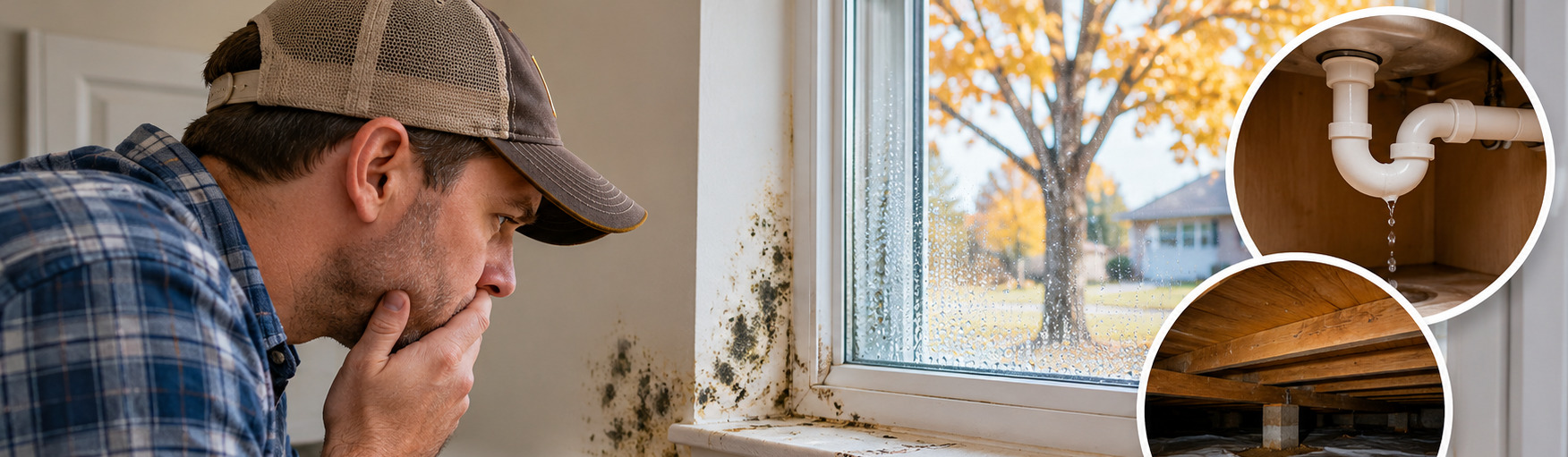
Even a small leak can cause damage if it continues for weeks. For example, a pipe beneath your bathroom sink might drip only when the faucet runs. The water lands inside the cabinet instead of on the floor.
Because you rarely look beneath the sink, the leak goes unnoticed. The cabinet stays damp, even while the rest of your home feels dry.
Fall Weather Can Cause Window Condensation
Cool fall mornings can also lead to moisture problems. When warm indoor air touches a cold window, small drops of water may form on the glass. This is called condensation.
You may have seen it on a bedroom window after a chilly night. A few drops aren’t always a problem. But if water collects on the windowsill every morning, the wood or drywall around it may stay wet.
Over time, paint can peel, wood can swell, and mold may begin to grow. That’s why it’s smart to watch for moisture problems even when there hasn’t been much rain.
Where Hidden Moisture May Be Hiding in Your Home
Water damage isn’t always easy to spot. Sometimes water travels behind walls or beneath floors before you see any signs of trouble. In other cases, it collects in a cabinet or closed-off space that you rarely check.
Knowing where moisture tends to collect can help you find problems sooner.
Behind Walls and Beneath Bathroom Sinks
Bathrooms have many pipes running through walls and cabinets. A small leak near a sink, toilet, or shower can allow water to reach drywall, wood, and insulation.
Imagine a family that notices a musty smell near the bathroom. They clean the floor and wash the towels, but the smell remains. Weeks later, they find a soft spot on the wall beside the sink.
The problem may have started with a slow leak behind the cabinet. Water can soak into drywall without leaving a large stain right away. By the time the wall changes color or feels soft, nearby materials may already be wet.
If you notice peeling paint, swollen cabinets, or a smell that seems to come from one wall, look for signs of a moisture problem. Fixing the leak is the first step. You may also need to find out how far the water has spread.
Phoenix Restoration provides water damage restoration and structural drying to help property owners deal with wet building materials after water damage.
Around Windows and Exterior Doors
Windows and doors can let moisture reach parts of your home that should stay dry. Sometimes the problem is condensation. Other times, rainwater may enter through damaged seals or gaps around the frame.
Take a close look at the lower corners of your windows. Is the paint peeling? Does the wood feel soft? Are there dark marks along the trim?
These signs may mean water has been reaching the same area again and again. A homeowner might wipe the windowsill every morning and think the problem is solved. But if the sill gets wet each night, the damage can continue.
The solution may involve better airflow, lower indoor humidity, or repairs around the window. Before making changes, find out where the water is coming from.
Beneath Floors and Behind Appliances
Your dishwasher, washing machine, refrigerator, and water heater can all develop leaks. Some leaks are easy to see. Others happen behind appliances, where water can collect for a long time.
A dishwasher might leak only during its wash cycle. A refrigerator’s water line might drip slowly behind the kitchen cabinets. The floor may look normal at first.
Later, you might notice that the flooring feels soft, has started to lift, or makes an unusual sound when you walk across it. You may also notice a musty smell near the appliance.
Water can become trapped beneath vinyl, laminate, or carpet. Even if the top of the floor feels dry, the material underneath may still be wet.
Crawl Spaces and Other Closed-Off Areas
Homes with crawl spaces may have damp areas beneath the floor. These spaces can contain plumbing, wood supports, and exposed soil. They can also collect moisture from leaks or drainage problems.
Because most people don’t enter their crawl spaces often, a water problem may go unnoticed. Sometimes the first sign is a musty smell in a room above the crawl space.
You might clean the room several times without knowing the odor is coming from below. If you suspect your crawl space has standing water, damaged wiring, or mold, avoid entering an unsafe area. A trained professional can inspect it more safely.
Attics and Roof Leaks
Water can also enter your home from above. A damaged roof or a gap around flashing may let rainwater into the attic. The water can soak insulation or travel along wood before reaching the ceiling.
You might not notice the problem until a brown stain appears overhead. Even after the rain stops, wet insulation or wood may take time to dry.
A musty smell near an attic opening or an old ceiling stain may be a sign that moisture is still present.
How to Tell If Hidden Moisture May Be Causing Mold
Mold needs moisture to grow. It can grow on many common building materials, including drywall, wood, and carpet, when those materials stay damp.
But how can you tell whether there may be a problem when you can’t see the mold? The answer often starts with small changes in your home.
A Musty Smell That Keeps Returning
One warning sign is a smell that comes back after cleaning. Imagine you notice a damp smell inside a hallway closet.
You remove the shoes and boxes, clean the shelves, and leave the door open for a day. The smell gets better. A week later, it returns.
The problem might be moisture inside the wall, water entering through an outside surface, or poor airflow around stored items. It may not be mold at all. But the smell gives you a reason to investigate.
Covering it with an air freshener won’t fix a hidden leak.
Changes in Walls, Floors, and Cabinets
Your home may show signs of water damage before you see mold. Paint might bubble or peel. A baseboard may begin to swell. Wallpaper could loosen near a window.
A cabinet bottom may feel soft when you press it. Flooring may lift at the edges. These changes don’t prove that mold is growing. They do suggest that water may have reached the materials.
Pay attention when the same spot keeps getting wet or looks worse over time.
Can Mold Affect Your Health?
Mold and damp indoor spaces can cause problems for some people. Possible effects include a stuffy nose, coughing, irritated eyes, or worsening asthma symptoms.
Not everyone reacts the same way. You also can’t tell how harmful a patch of mold may be just by looking at its color.
If someone in your home has ongoing breathing problems or other health concerns, speak with a healthcare professional. For the home itself, the next step is to find and correct the moisture problem.
Why Cleaning Mold Doesn’t Always Fix the Problem
Finding mold on a wall or beneath a sink can be upsetting. Many homeowners reach for a spray cleaner and try to remove it right away.
Cleaning may work for some small areas on hard surfaces. But if water is still getting into the area, the problem can return.
The Leak May Still Be There
Think about a bathroom cabinet with a small pipe leak. You notice a dark patch on the cabinet floor. You clean it, dry the area, and put your supplies back.
Everything looks fine. But the pipe keeps dripping. A few weeks later, the dark patch returns. The cleaning didn’t stop the water.
To help keep mold from returning, you must fix the source of moisture. That may mean repairing a pipe, stopping rainwater from entering, or dealing with repeated condensation.
Without that repair, the same materials can become wet again.
Some Materials May Need to Be Removed
Not all building materials can be cleaned in the same way. A hard surface, such as tile, may be easier to clean.
Drywall, carpet padding, and insulation are different. Water can soak deep into these materials. If mold has grown inside them, wiping the surface may not be enough.
Some materials may need to be removed and replaced. This doesn’t mean every mold problem requires tearing out walls. The right choice depends on where the mold is growing and how much damage is present.
Be Careful With DIY Mold Removal
Trying to remove a large mold problem yourself can create other concerns. Scrubbing or pulling out moldy materials may send particles into the air. Using an ordinary fan near visible mold can spread those particles around the room.
Bleach also isn’t the answer for every mold problem, especially when mold is growing in materials that absorb water. Never mix household cleaning chemicals.
If mold covers a large area, keeps returning, or appears to be inside walls or floors, professional help may be the safer choice.
Phoenix Restoration’s mold remediation FAQs and prevention recommendations offer more information about mold, moisture, and restoration work.
What Happens During Professional Mold Remediation?
If you have a strong musty smell or signs of hidden water damage, you may need help finding the cause.
When homeowners search for professional mold remediation services, they often want to know what the process involves.
Professional mold remediation is about more than cleaning a stain. It focuses on finding moisture, dealing with affected materials, and helping prevent the same problem from returning.
Finding the Source of Moisture
The first step is learning what happened. A restoration professional may ask when you first noticed the smell and whether your home has had a recent leak, storm damage, or plumbing problem.
They may check nearby walls, floors, and cabinets. Moisture meters can help find wet materials that look dry on the surface. Other tools may help locate areas that need a closer inspection.
The goal is to find out where the water is coming from and what it has affected.
Checking the Damage
Once the source is found, the next step is to see how far the damage goes. A small leak may affect only one cabinet.
A leak that has continued for months may have reached the wall, floor, or insulation. Some materials may be cleaned and dried. Others may need to be removed.
The work should match the actual damage. A small problem should not be treated like a major one without good reason.
Cleaning, Removing, and Drying Materials
When moldy materials need to be disturbed, workers may set up barriers to help keep particles from moving into clean parts of the home.
They may use special vacuums, air-cleaning equipment, and safe removal methods. After affected materials are cleaned or removed, the area must be dried.
The original leak or moisture source must also be fixed. Otherwise, the problem may return.
Keeping Homeowners Informed
Water and mold damage can be stressful, especially when you don’t know what’s happening behind a wall. Clear communication helps homeowners understand which areas are affected and what work needs to be done.
Photos, moisture readings, and work records can also be useful if an insurance claim is involved. Insurance coverage depends on your policy and what caused the damage.
Phoenix Restoration & Roofing focuses on mitigation and remediation. That means finding and addressing damage, cleaning or removing affected materials, and preparing the space for any needed repairs.
For homeowners looking for professional mold removal and remediation services, Phoenix works to explain the problem clearly and help them understand the next steps.
Simple Ways to Help Prevent Moisture and Mold Problems
You can’t prevent every leak or water problem. But a few regular habits can help you find trouble sooner.
Start by checking beneath your kitchen and bathroom sinks every few weeks. Look for wet spots, stains, or swollen wood.
Pay attention to your windows during cold weather. If water forms on the glass each morning, check whether it’s soaking the trim.
Watch the flooring near your dishwasher, washing machine, and refrigerator. If you notice a new stain on a ceiling or wall, try to find the cause instead of painting over it.
Ventilation also matters. Use bathroom exhaust fans during and after showers. Make sure your clothes dryer vents outdoors.
Keeping indoor humidity below 60%, and ideally around 30–50% when practical, can help reduce moisture problems.
Most of all, act quickly when you find unwanted water. Mold can begin growing on damp materials within about 24 to 48 hours when conditions are right.
Not every wet surface will grow mold, but leaving materials damp for days can raise the risk. If water has reached a wall, floor, or other closed-off area, a professional moisture check may help you find damage you can’t see.
Conclusion: Don’t Ignore a Musty Smell in Your Home
A musty smell doesn’t always mean your home has a serious mold problem. It could come from a small leak, damp window trim, or an area with poor airflow.
But when the smell keeps coming back, it’s better to find the cause than to keep covering it up.
Even during dry weather, water can collect in places you rarely see. Finding that moisture early may help prevent damage to your walls, floors, and other parts of your home.
Concerned about a musty smell or possible mold growth?
Phoenix Restoration & Roofing helps homeowners and property owners address moisture damage and mold concerns through professional restoration and remediation services.
Visit Phoenix Restoration & Roofing or call 877-662-0108 to request a free consultation and learn what steps may be needed to protect your home.
Rising from every disaster. Every time.
Frequently Asked Questions
Can mold grow in a home when the weather is dry?
Yes. Mold needs moisture, but it doesn’t need humid outdoor air. Leaks, condensation, and trapped water can create damp indoor areas even in dry weather.
Does a musty smell always mean mold is growing?
No. A musty smell can have several causes. If it keeps returning, check for moisture instead of just covering the odor.
Where is hidden mold most likely to develop?
Possible trouble spots include bathroom walls, sink cabinets, window frames, flooring beneath appliances, crawl spaces, and areas affected by roof leaks.
What are the early warning signs of hidden moisture damage?
Watch for peeling paint, swollen trim, soft drywall, warped floors, water stains, and odors that keep returning. These signs don’t prove mold is present.
Can I remove mold myself with bleach or household cleaners?
Small areas on suitable hard surfaces may be cleaned using safe methods. Bleach is not a solution for every material, and larger or hidden problems may need professional help.
Will mold return after cleaning?
It can if the leak or other moisture source remains. The area must be cleaned or treated as needed, and the source of water must be corrected.
How quickly can mold develop after water damage?
Mold can begin growing on wet materials within about 24 to 48 hours under favorable conditions. Prompt drying lowers the risk.
When should I call a professional for mold remediation?
Consider help when moisture is hidden, mold keeps returning, or the affected area is too large or unsafe to handle yourself.
This article is a collaboration between Phoenix Restoration and Roofing and OpenAI’s ChatGPT. Created on Nov 05, 2026, it combines AI-generated draft material with Phoenix’s expert revision and oversight, ensuring accuracy and relevance while addressing any AI limitations.
Recommended Reading
Mold Remediation in Schools and Commercial Buildings — Chapter 3
U.S. Environmental Protection Agency (EPA)
Explains remediation planning, cleanup methods, and decisions about damaged materials. Useful for restoration managers and adjusters planning work scope and containment.
Dampness and Mold Assessment Tool — General Buildings
CDC / National Institute for Occupational Safety and Health (NIOSH)
Provides a structured way to document dampness, mold odors, visible growth, and water damage. Useful for field inspections and tracking problem areas.
ASHRAE Handbook — Chapter 37: Moisture Management in Buildings
ASHRAE discusses moisture movement, humidity, and how dampness affects buildings. Useful for engineers and building consultants studying condensation and recurring moisture.